"When I use a word," Humpty Dumpty said in rather a scornful tone, "it means just what I choose it to mean—neither more nor less."
"The question is," said Alice, "whether you can make words mean so many different things."
"The question is," said Humpty Dumpty, "which is to be master—that's all."
I did my undergrad in English literature, and in English departments we spend a lot of time wrestling with the question of what a text means.
Literary theory arose as an attempt to answer that question. And by 1980, the field had worked itself into a problem.
On one side, E.D. Hirsch (1928 - ) and the New Critics argued that meaning was to be found either in the text itself or in the author's intention. It was the reader's job, on this account, to go recover it: to read closely, with great attention to form, without projecting one's interpretative fantasies onto the text, until it yields the meaning planted therein.
This assumption still drives most writing instruction today.
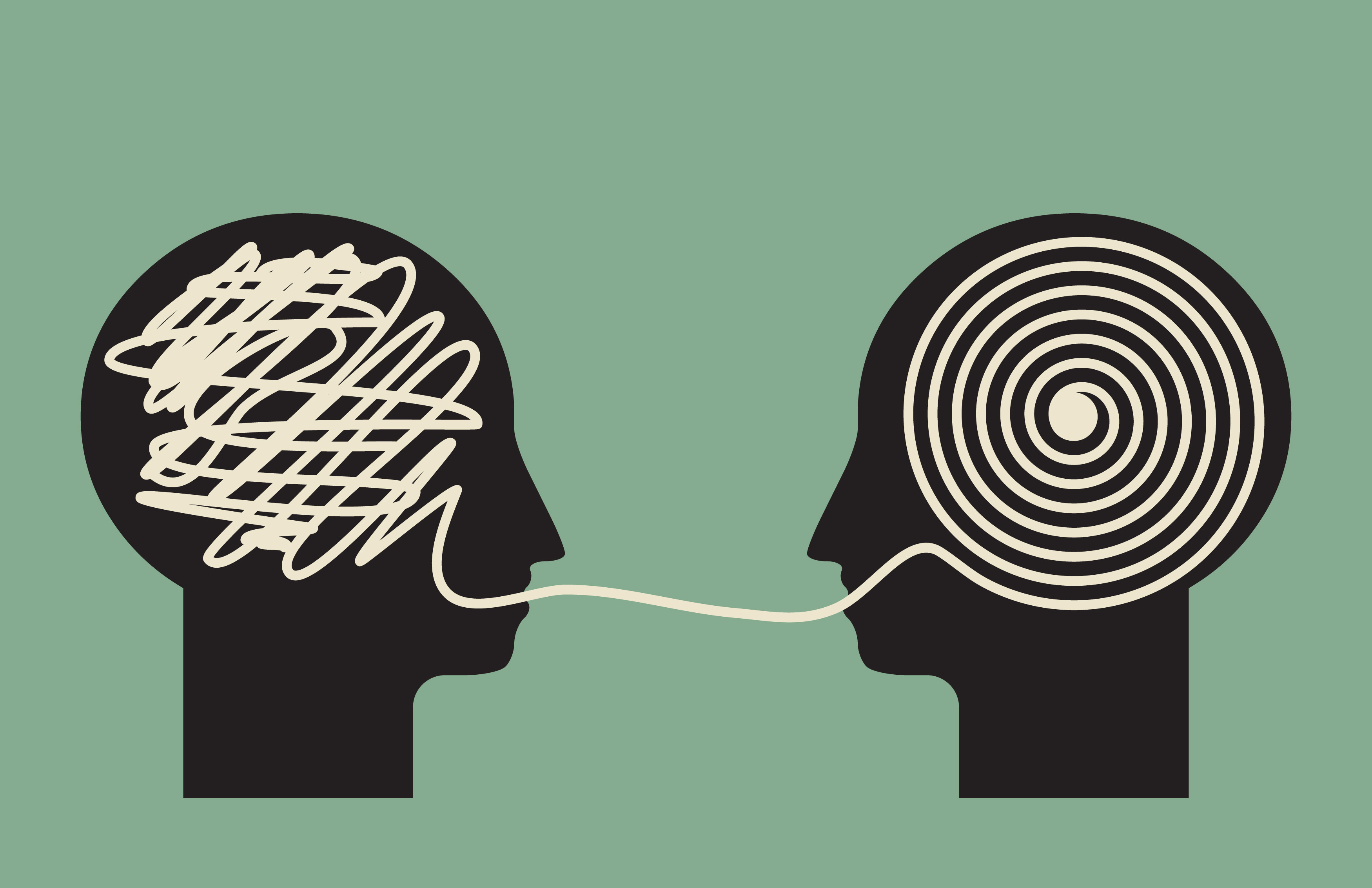
The Plain Language movement, style guides, and the whole apparatus of "say what you mean and mean what you say" all imagine writing to be a "well wrought urn" and meaning to be its contents. Communication, on this account, is a matter of packaging: Choose the right words, structure your sentences tightly enough, eliminate ambiguity, and meaning will transfer intact from your mind to the reader's.
On the other side, people like Roland Barthes (1915 - 1980) and Jacques Derrida (1930 - 2004) had spent the previous two decades dismantling the author as any kind of authority, which was liberating up to a point, but left a lot of critics nervous.
M.H. Abrams, for example, worried that post-structuralist reading practices would lead us to a world in which a text can mean anything, which is to say it means nothing:
The central contention is not simply that I am sometimes, or always, wrong in my interpretation, but instead that I... can never be right in my interpretation.
So if the author doesn't control meaning, and the text doesn't either, then who does?
What the Book Says

Both sides are asking the wrong question, according to Stanely Fish (1938 - ).
In Is There a Text in this Class?: The Authority of Interpretative Communities (Harvard UP: 1982), Fish argues that meaning isn't hiding in the text waiting to be found, nor is it just whatever you feel like. Instead, meaning is produced by interpretive communities—groups of readers who've been trained by institutions and culture to perceive texts in particular ways.
This training happens, according to Fish, before you sit down to read. His argument is not readers first encounter a text and then apply an interpretive framework. The framework is already shaping what you see.
Think about what happens when you pick up one of these types of genres:
- a literary short story
- a legal brief
- a text message from your mother.
How do you know it's an example of that type of genre? How do you know you're looking at a literary short story and not a legal brief?
You won't find it written in the title (e.g.—Oedipa Maas v. Yoyodyne Propulsion Systems: A Legal Brief). Nor did anyone sit you down and explicitly teach you the conventions of a legal brief or a literary short story (or if they did, that was only a small part of it).
Most of your knowledge of the genre is accumulated exposure through institutions and culture: every courtroom drama you've watched, every contract you've signed, every other short story you've read, every writing workshop that praised compression and ambiguity—these experiences have all been training you on how to interpret the text.
Institutions (schools, legal systems, publishing industries, professional communities) don't just produce texts. They produce readers and writers.
They train you in what to look for, what counts as significant, what kind of attention a given kind of document deserves. So by the time you pick up a legal brief or a short story, you've already been shaped by hundreds of prior encounters with documents that share what Wittgenstein calls "family resemblances." And these encounters in turn shape the expectations and strategies you bring to your interpretation of the text.
How It Works
Fish grounds the argument in an intuition pump:
A student approaches a professor on the first day of class and asks, Is there a text in this class? The professor hears a straightforward question about the syllabus and answers accordingly. But the student clarifies: she means, does this class operate under the assumption that texts have stable meanings, or not? She'd just come from a course with Professor Fish, and the question was theoretical.
Same words. Two different questions.
The point of this anecdote isn't to illustrate the deconstructionist point that language is hopelessly ambiguous. Quite the opposite. Neither of these meanings were vague or unstable within its respective context. Both were immediately intelligible to someone operating within the right set of assumptions.
The problem wasn't the words; it was that the professor and the student were working approaching the text from different sets of background beliefs.
What Sets It Apart
The move that makes Fish interesting and useful for writers is that he refuses both exits that most theorists would take.
He doesn't retreat to "the text means what it means" formalism.
But he also doesn't give the post-structuralist shrug and say interpretation is just subjective, everyone's reading is equally valid, who's to say.
That second position might sound open-minded but it's actually a dead end, because it makes it impossible to explain why some interpretations stick and others don't, why critical consensus forms around certain readings, why you can be wrong about what a text means.
What Fish offers instead is a way of thinking about norms of interpretation that doesn't require pretending they're natural or universal.
Interpretive communities develop shared conventions, and those conventions are real and consequential, but they're not eternal. They shift. They have provenance and trajectories. And because they're institutional (rather than intrinsic to the text), different communities can read the same text differently without either of them being simply mistaken.
What have they read before?
What genre expectations are they carrying into your work?
What conventions have been so thoroughly absorbed that violating them will feel like an error rather than a choice?
A writer who understands one's interpretive community can work with its assumptions deliberately: meeting expectations where trust needs to be built, subverting them where surprise is the point, and making language choices that produce intended effects within specific readers.
Who It's For
Fish writes for academic literary critics, and the book's debates (between New Criticism, reader-response theory, deconstruction) can feel remote if you're not embedded in that world.
But the underlying question is one that anyone serious about writing eventually has to reckon with: what happens when someone reads what you wrote?
The answer Fish gives is more complicated than "they're getting your meaning" and more useful than "it's all subjective." Readers come to your text as members of communities with interpretive habits (expectations, needs, strategies) so practiced they feel like common sense—because they are common, to that community.
Understanding those habits doesn't mean giving up on clarity or precision. It means understanding that clarity and precision are not properties of sentences in isolation, but effects produced within a shared set of expectations between writer and reader.
That's a harder thing to aim for than just "say what you mean." But it's also a more honest account of what good writing actually does.