Table of contents
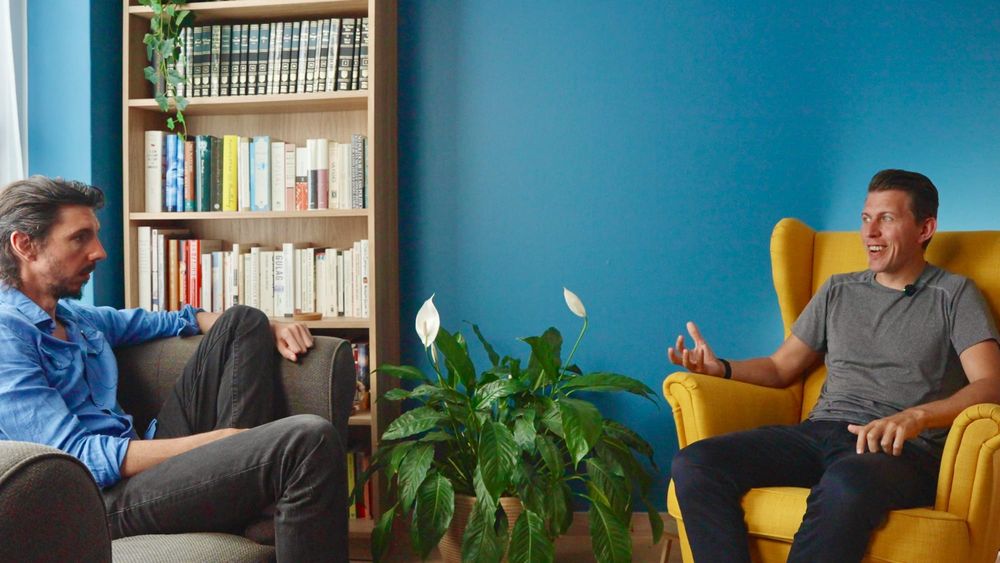
Paul Millerd wasn't always this free. Prior to building a writing life of creativity, curiosity, and ruthless independence, Paul found himself living the kind of life that looks great on paper. But when the MIT graduate who'd spent a decade in strategy consulting at firms like McKinsey decided to quit, what he found was not freedom but disorientation, a weightlessness he hadn't expected—call it the unbearable lightness of being unemployed.
Leaving NYC for Asia, Paul started writing online to make sense of it all. When the pandemic arrived a few years later, the questions he'd been asking and the answers he offered up connected him with a growing body of readers who were making their own sense of our evolving relationships with work, identity, and meaning.
Whatever literary success Paul Millerd has built, he built slowly and on his own terms. He grew his readership the inefficient way: by holding hundreds of free one-on-one "curiosity conversations" with readers, who spoke candidly with him about their hidden dissatisfactions and unspoken dreams. Those exchanges crystallized into The Pathless Path (2022), a book Millerd self-published and barely launched that went on to sell tens of thousands of copies by word of mouth alone. When Penguin-Random House eventually came calling to buy the rights—offering distribution he did not need, in exchange for control he was unwilling to surrender—he turned them down.
Leaving a prestigious career to write online, selling time for free, turning down a $200K book deal from a Big 5 publisher—none of this makes a bit of sense if you think of your writing as a commodity. These decisions mark the trail of a writer who treats his work as a gift, and one who guards the freedom to keep it that way at almost any cost.
I came into his orbit in much the same way: by following my own curiosity without much of a plan. Last year I made a video about The Pathless Path because the book had gotten under my skin and I wanted to explain why. Paul reached out to tell me it was the best explanation of his work he'd heard. Knowing he lived somewhere in Asia, I invited him to drop me a line if he were ever in Korea. When he mentioned that he'd soon be in Busan, the city I happen to live in, it was clear that we'd have to arrange a curiosity conversation of our own.
The conversation that follows is the result of that unlikely overlap—which, when you think about it, captures something of its own thesis: make the thing only you would make, send it out as a gift, and be delighted with the connections it may spark.
Reject the Label
Writer Science: You've sold over 80,000 books and have 25,000 newsletter subscribers. But you say that you're not a writer. Why do you reject that label?
Paul Millerd: I am not a writer. I'm not an author.
Early on, it was very important to me to avoid the trap of overidentifying with any of the paths I was pulled to. I realized I love creating online. I loved writing. But I had spent ten years in a career in which I felt increasingly stuck, and at the end I was running away from that.
When I started doing things online—writing online, and eventually writing a book—it was very important to me to literally not do what almost everyone else around me was doing.
The reason was that I saw the same trap I had fallen into in my twenties: overly identifying with a path, and with the identity of the successful worker and consultant, and not seeing the possibilities beyond it. I never wanted to be that stuck again.
So a lot of how I've designed my path is to create optionality—psychologically. There's this boundless opportunity and possibility, while at the same time I can consistently commit to the things I actually like doing.
WS: How does not being a writer help you do that?
PM: What is a writer supposed to do? A bestselling author does talks, promotes their books, spends a lot of time connecting with other bestselling writers, worries about what people in the publishing industry think. And these are all the things I got caught up in during the first chapter of my career—what are the best companies to work for, what are the next best offers, how do I keep making more money?
After I quit my job, I fell in love with writing. And I saw that the biggest risk to actually losing that love was identifying with the identity of the writer, rather than staying focused on the enjoyment of the activity.
So while I'll introduce myself as an author or writer—mostly for the benefit of other people to understand where I fit in their world—I write because I love writing and creating.
I am not a writer or author.
Reject the Book Deal
WS: You turned down a book deal that many writers only dream of. How did you make that decision?
PM: In 2023, The Pathless Path started taking off about a year after I published it. I had sold around 10,000 copies in the first year. The book was selling faster and faster, and Penguin reached out about acquiring the rights. Economically, it's very hard for a publisher to buy a book that's already selling well—the economics are already good for the author, and publishers usually pitch authors who aren't yet in the world by saying, We can help your book get in front of a lot of people.
The week I talked to them, I had just finished a month in which I'd sold around 5,500 copies across all formats and earned about $30,000 in royalties—profit, direct to me. They were offering $70,000 for the lifetime rights of The Pathless Path—for my life plus seventy years. That's copyright. You never get those back; not even your great-great-grandchildren can get them back.
Most people take a deal like that for a two-week shot to be in a big bookstore and ride the launch energy. Maybe it's worth it. But what I was looking for was: what are the creative and weird ideas they've come up with? What did they learn from reading my book? There must be some interesting pitch, some collaboration they want to do. There were no ideas. So I said no.
Writing is this beautiful home I found, and I'm going to pursue things that bring my life energy. At all costs. I'll do other things to make money to fund this work.
Reject the Writing Rules
Paul protects the work and lets the money sort itself out. And to build the kind of writing life where that kind of decision feels simple, he had to reject six rules that most writers treat as non-negotiable.
So let's go through them in turn, because these six rules of writing sound like common sense. But these rules, if you follow them, almost guarantee you end up writing for an algorithm, an editor, or an audience—instead of for yourself.
RULE 1 — Build an Audience Before You Publish
WS: Before publishing, writers are told to build an audience. Start a newsletter, grow a following, that kind of thing. Is that true?
PM: You do need an audience in the modern world. But what does a good audience mean to me? It means I actually like the people I've attracted. I want to talk to them, engage with them, hear back from them in newsletter replies.
To get a good audience, you have to create in a way that's genuine and aligned with what you believe—not leaning into hot takes or hustle tactics to force growth.
What that's mostly meant for me is that I've grown slower than almost everyone I started writing with. I could easily hire a content person to pump out a weekly newsletter. I could run ads and funnel people in with generic "here's how to quit your job" content. It just doesn't interest me.
You do need an audience in the modern world. But what does a good audience mean to me?
I've never scheduled a post more than a day or two ahead. The ideas are live, emerging from what I'm actually thinking right now.
When I published my book, I had a couple thousand subscribers. At that level I never could have gotten a book deal. Publishers look at list size as a proxy for book sales. But what they don't know is that I'd had hour-long conversations with five hundred of those people. I'd been in this beautiful dance of sharing ideas, hearing back, riffing—creating this little ecosystem where a phrase like "the pathless path" unites people who have a lot in common.
RULE 2 — Play the Platform Game
WS: Each platform has its own incentives and rules it wants you to play by. How do you see early writers getting caught up in that?
PM: There's almost a necessary evil to playing the platform game early on.
On Quora, there was a certain style—the first sentence was hidden and you had to click to open the full answer, so you learned to write a hook. The same hooks you see on Instagram now: I didn't know it was over until it was. You learn to play the game.
The phrase I come back to is: learn the game, but don't become the game.
On YouTube, for example, you must pay attention to thumbnails and titles—you're just being naive if you don't. But if you're not also making some choices that say, "I know how the algorithm works and I'm choosing not to lean into that." You will just become a producer for the algorithm, no longer connected to what you actually want to be doing.
I'm on Substack now, and Substack wants me to be a paid writer. I was monetized for a bit, and it made sense when I was making twenty thousand dollars a year—a couple hundred dollars a month was meaningful. But eventually it felt like a burden to deliver something of value to those subscribers when I just wanted it to be a gift. I shut it down three years ago and moved to a model where I have a community with a one-time fee, and that feels right.
It felt like a burden to deliver something of value to those subscribers when I just wanted it to be a gift.
The thing is: if you optimize solely for an algorithm, you lose yourself. Maybe some people can do it. Mr. Beast genuinely loves pushing the algorithm to its limits. He learned the game, he became the game, and now in a way he sets the norms.
But if this work is your art, and creative work is at its best when you protect that creative mode, you must be making weird decisions that aren't aligned with the algorithm.
Interpolation: Do Something that Won't Compute
If you don't learn the game, you don't get read.
But if you become the game, then you stop writing for readers and you start performing for an algorithm.
To protect his work from this influence, Paul makes at least one decision per project that the algorithm would tell you not to make.
When he told me this, before our interview when we met for coffee, I shared with him the following poem by Wendell Berry:
Love the quick profit, the annual raise,
vacation with pay. Want more
of everything ready-made. Be afraid
to know your neighbors and to die.
And you will have a window in your head.
Not even your future will be a mystery
any more. Your mind will be punched in a card
and shut away in a little drawer.
When they want you to buy something
they will call you. When they want you
to die for profit they will let you know.
So, friends, every day do something
that won’t compute. Love the Lord.
Love the world. Work for nothing.
Take all that you have and be poor.
Love someone who does not deserve it.
Denounce the government and embrace
the flag. Hope to live in that free
republic for which it stands.
Give your approval to all you cannot
understand. Praise ignorance, for what man
has not encountered he has not destroyed.
Ask the questions that have no answers.
Invest in the millennium. Plant sequoias.
Say that your main crop is the forest
that you did not plant,
that you will not live to harvest.
Say that the leaves are harvested
when they have rotted into the mold.
Call that profit. Prophesy such returns.
Put your faith in the two inches of humus
that will build under the trees
every thousand years.
Listen to carrion – put your ear
close, and hear the faint chattering
of the songs that are to come.
Expect the end of the world. Laugh.
Laughter is immeasurable. Be joyful
though you have considered all the facts.
So long as women do not go cheap
for power, please women more than men.
Ask yourself: Will this satisfy
a woman satisfied to bear a child?
Will this disturb the sleep
of a woman near to giving birth?
Go with your love to the fields.
Lie down in the shade. Rest your head
in her lap. Swear allegiance
to what is nighest your thoughts.
As soon as the generals and the politicos
can predict the motions of your mind,
lose it. Leave it as a sign
to mark the false trail, the way
you didn’t go. Be like the fox
who makes more tracks than necessary,
some in the wrong direction.
Practice resurrection.
Every day do something that won't compute: write the post that doesn't fit the brand. Use the title that won't rank. Skip the hook this time. Tell a story that doesn't pay off in a numbered lesson.
Those weird decisions are how you remind the platform (and yourself) that the writing belongs to you.
RULE 3 — Monetize Your Writing
WS: Many writers look forward to the day when they can monetize their writing. But you made a deliberate decision to shut down your paid Substack.
PM: Monetizing your writing for small dollars too early is a distraction.
Early on I thought about freelance writing for publications—future-of-work content was hot in 2018. I went through the pitching process once and it was so draining. It took forever, they edited and changed my words, and it didn't fit how I wanted to write. So I decided that I'm not going to try to make money from writing. I'm going to cultivate the habit and stay attuned to the connection I'm developing and see where that takes me.
I accepted gifts to support my writing early on, but it was very clear: not in exchange for the writing. I would write on my own terms, in my own way. I took weeks off. There was no self-coercion to keep doing it.
Over time, now I have all sorts of opportunities to sell my writing, and it feels great, because I know I can do it on my own terms in a way that feels sustainable.
And this comes back to identity. I didn't start out wanting to be an author. I became an author because it was the next logical step on my natural journey. If I never publish another book, that's totally fine. I already spent years doing this for fun, so I know I'll just keep doing it for fun.
WS: Have you ever read about the early days of Cormac McCarthy?
PM: I know he had a very similar mindset—and a much harder time. People don't understand: when you look back at writers like Cormac McCarthy, or go back a couple hundred years when women had to risk their lives to write and published under pen names, men who wrote their whole lives and ended up destitute—we are risking almost nothing to be public writers today. Writing is so delightfully easy and easy to reach people. It's the greatest gift in the world that I get to spend any amount of my time writing and make money from that.
People like Cormac McCarthy pinched pennies to protect the ability to write on their terms for years. And in those days, you needed permission from the formal establishment to get your work to people. I respect that so much.
It's the greatest gift in the world that I get to spend any amount of my time writing and make money from that.
If I was born forty years ago and doing this, I don't know if I'd be a writer. I didn't grow up in the right families or social circles to access those worlds. I'd have been pitching and getting rejected constantly. I'm probably too disagreeable, too.
RULE 4 — Write for Your Audience
WS: To what extent does your reader figure into your writing?
PM: I'm very aware of the audience. I write socially because I want to find the others. I want to find other people on paths that must find another way in life and work. But I don't write for the audience in the sense of producing things I'm not interested in.
There's a very clear genre that performs well—rejecting the default path and making lots of money as a self-employed person, or "here's how to crush your career." People eat this up. I just can't do it.My curiosity is such a strong force. If I'm going to write about AI one month, about protocols the next month, about economics the next—I'm going to do that.
Early on, people worry far too much about the big audience. No one cares if you write about different things. I have 25,000 people in my newsletter and not one has ever complained that I switched topics.
I also deliberately try to write things that aren't aligned with what I think the audience expects. I'll write a post saying I think AI writing is great, I'm excited to see what people create with it. I would be very happy if people who strongly disagree leave my list. But I'd be even happier if someone says, "I really disagree with that, but I love that Paul is honest and true to his own interests — I'm going to stay."
I write socially because I want to find the others.
WS: To what extent do analytics, click-through rates, and open rates play into your direction?
PM: I don't pay attention to it at all. I probably spend one to five minutes a month thinking about it. I just can't be bothered. I think, If I grow my newsletter I could sell more books—and then I lose interest and go do something else.
RULE 5 — Write Every Day
WS: Are you disciplined with your writing?
PM: I did not write today. I did not write yesterday. I did not write the day before. I do not write every day.
My mantra early on was to write most days, which was an acknowledgment of two things. One: committing to myself that I actually want to write. Two: that I didn't need to take it so seriously because it just happened. Whenever there was space in my life, writing would happen. It was really about protecting the energy in which writing most days could occur.
I think a lot more about what are the conditions that enable writing to happen, rather than how do I stick to a streak. Streaks early on can be very helpful, but find a streak to leave a streak. What I mean is: commit to a schedule, say a hundred posts or one post per week. That can really help you get through the first phase of insecurity, finding other writers, getting reps. But it's a means, not the model you live by forever.
Currently I'm in the longest newsletter drought I've had. I do feel that. I'm trying to remind myself to write most days, and I'm a bit under that. I feel this nervous excitement—I want to write more, I feel called to it. I know it will happen. I just need to restructure how I'm spending my time.
RULE 6 — Launch Hard
WS: When you launch a big project like a book, you're supposed to go all out, with podcast tours and social media campaigns.
PM: I haven't done a real launch for either of my books. With both, there was an email sent out, and a handful of people asked to interview me—very few for the first book because I just didn't have the audience, seven or eight for the second. That was essentially it.
The way I think about it is: some writers have launch energy, and some have long-game energy. I have long-game energy. I write books I'm genuinely interested in and want to keep talking about. It's not a chapter that closes. I'm going to be the weirdo at fifty-five years old still talking about The Pathless Path.
And launches don't matter that much for self-published writers. You need an initial seed audience—people who will actually read your book and then share it. But you don't need that many.
Some writers have launch energy, and some have long-game energy
The benefit of the way I'd been building my audience is that the people who bought my book were actual readers, not just purchasers. In a traditional book launch with a publisher, you care a lot about purchasers and pre-orders—that's a signal you're sending to bookstores to stock the book. But I can't even access that system, so I don't care about it.
Embrace Yourself
WS: What can writers learn from how The Pathless Path spread? What pitfalls should they avoid, or what stance should they take to give themselves the best shot at that kind of word-of-mouth?
PM: The most important thing as a writer is: don't sell out. Most writers sell out, because the incentives of the publishing industry push you to make compromises at the margin to attract more people and do things the proven way.
If people want to take a shot at creating work that will resonate more deeply and last, you have to surrender completely to what your curiosity, your interests, and your creative instincts are telling you. Cultivating and attuning to those instincts is very hard. But if you're willing to spend time doing that and practicing your craft over time, you can end up with something that's genuinely yours—that only you can put out—that will resonate with people in a deep way they can feel but can't quite explain. And that has a chance to spread.
The thing you have to be willing to embrace is that it may not spread. The reason we're talking about The Pathless Path is because somehow that book spread—right title, right ideas, right timing, right person, right package. I love my second book, Good Work. I think it's better. It's weirder, leaning further in the direction I want to go. But it hasn't resonated in the same way. I can't control that, because at the end of the day, creative work is in the eyes of the receiver. It's in the eyes of the world.
And that's why it's a gift. You received something true. You saw something in the world and you passed it forward. Whether it propagates—that was never the point. The point was to continue living my life. And it works because that's what my book is about. And then it becomes this self-perpetuating flywheel: the book continues to spread, and that's how I continue to live, and that's what I keep writing about.
If you want to take a shot at creating work that will resonate more deeply and last, you have to surrender completely to what your curiosity, your interests, and your creative instincts are telling you.
WS: You've inspired a lot of writers — people who found their ambition to start writing through your work. What would you say to those writers? Not to follow your path, but to carve out their own?
PM: Well, I hope they do join me on my path—I'm always looking for other weirdos headed in similar directions.
But what I would say to writers who are trying to do things on their own terms: you must figure out what is weird about you, what is unique about you — and then do it full out. Fully commit to it.
I love this Dolly Parton quote:
Find out who you are, and do it on purpose.
That is incredibly scary to do. The emotions stirred up when you dare to be who you actually are, to be interested in what you're actually interested in. It's challenging and hard. But it's worth it. Because on the other side is a life that is attuned to who you actually are—one that you can keep adapting and evolving in a way that feels lighter, more interesting, and more alive.