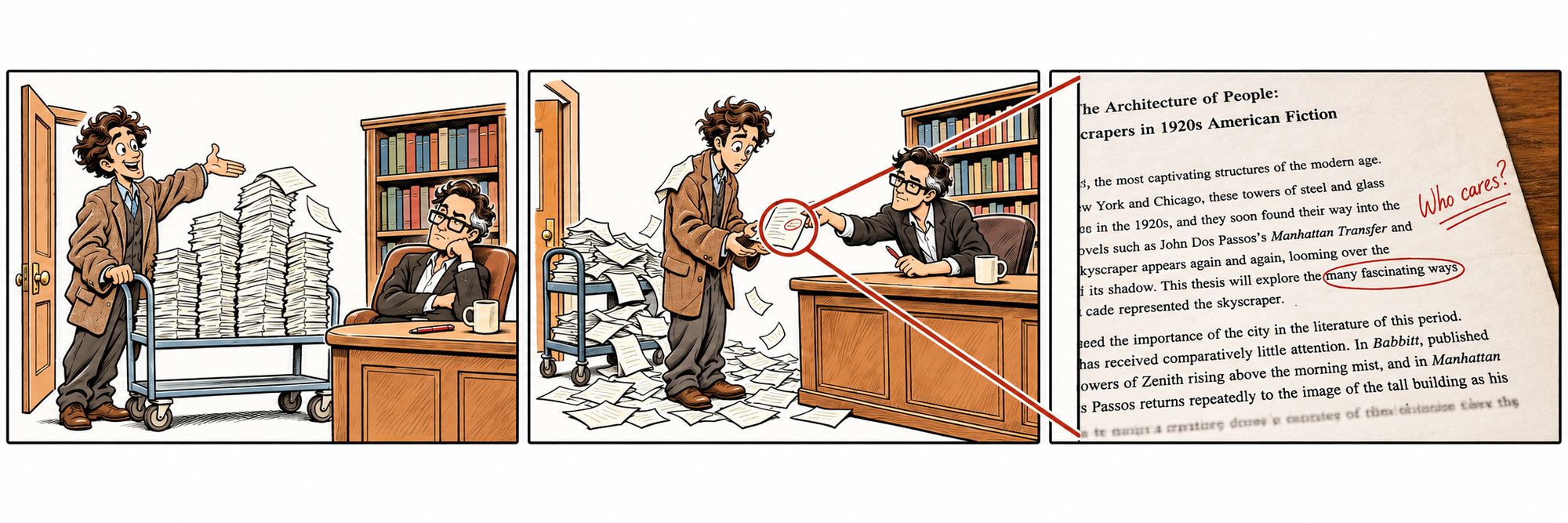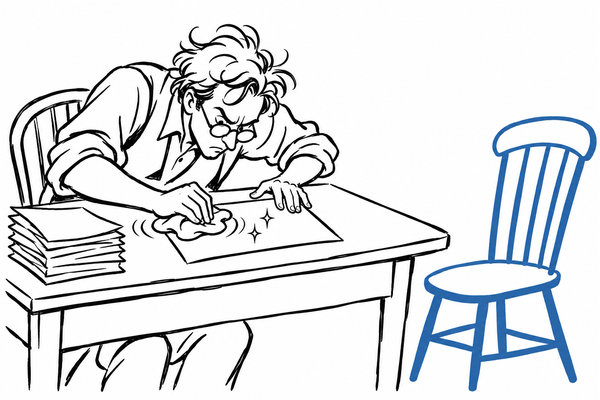
The best writing advice I've ever received was only two words.
Those two words saved me from years of working on the wrong thing, and they transformed how I see writing.
They stung, too, because they cut at the one thing my brain had always done well: language.
When I was seven, I had a stroke.
Luckily, I regained my motor function. But the stroke damaged the right side of my brain—the hemisphere that handles visual and spatial processing. During recovery I learned to re-route those processes through the left side—the hemisphere that handles language. One doctor's report put it plainly: I'd learned to process space through language.
Language became my superpower, so I built my identity around being a writer.
In grade school I started a school newspaper (mainly as an excuse to stay indoors during mandatory recess periods in the harsh Canadian winter). In high school I was given the opportunity to write a column for the regional newspaper. On my first day in university I joined the campus newspaper—first as a reporter and eventually as managing editor. I also co-founded the only literary magazine on campus.
So you'll believe me when I say that I was the writing guy.
Or so I thought. I thought I knew what good writing was: tight sentences, clear organization, stylish verbs.
How wrong I was.
Years later, in my senior year of university, I found a project and a professor who would transform my relationship with writing.