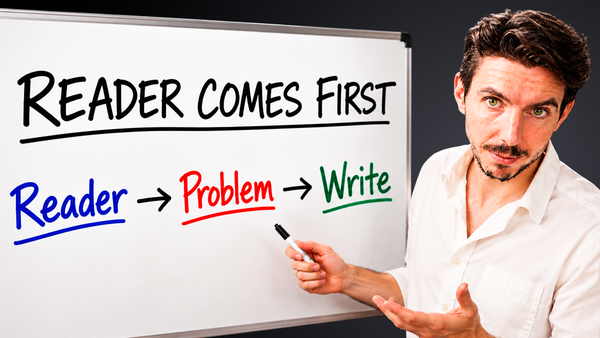
Most writers judge a draft by whether it says what they mean. That's a fair test: the ideas have to be right. Yet readers don't owe you their attention. They give it when a piece speaks to a problem they have, in a voice that sounds like a person. When it starts from the writer's interests instead, in the flat voice of a report, readers skim, stop and don't come back.
These posts show how readers actually read and what makes them care: the problem that earns their attention, the expectations they bring to every sentence, and a voice that sounds like you. Along the way: what essayists like George Saunders and Adam Gopnik do, and which writing rules are worth breaking.