I recently got into a public argument with a grammar nazi on 𝕏.
It started when I shared some writing advice about terminal prepositions—you know, ending sentences with words like "at," "with," or "to."
Some people say it's improper to end a sentence with a preposition.
That position is dramatized in the 1994 movie With Honors. Joe Pesci plays a homeless man who ends up squaring off against a pompous Harvard professor.
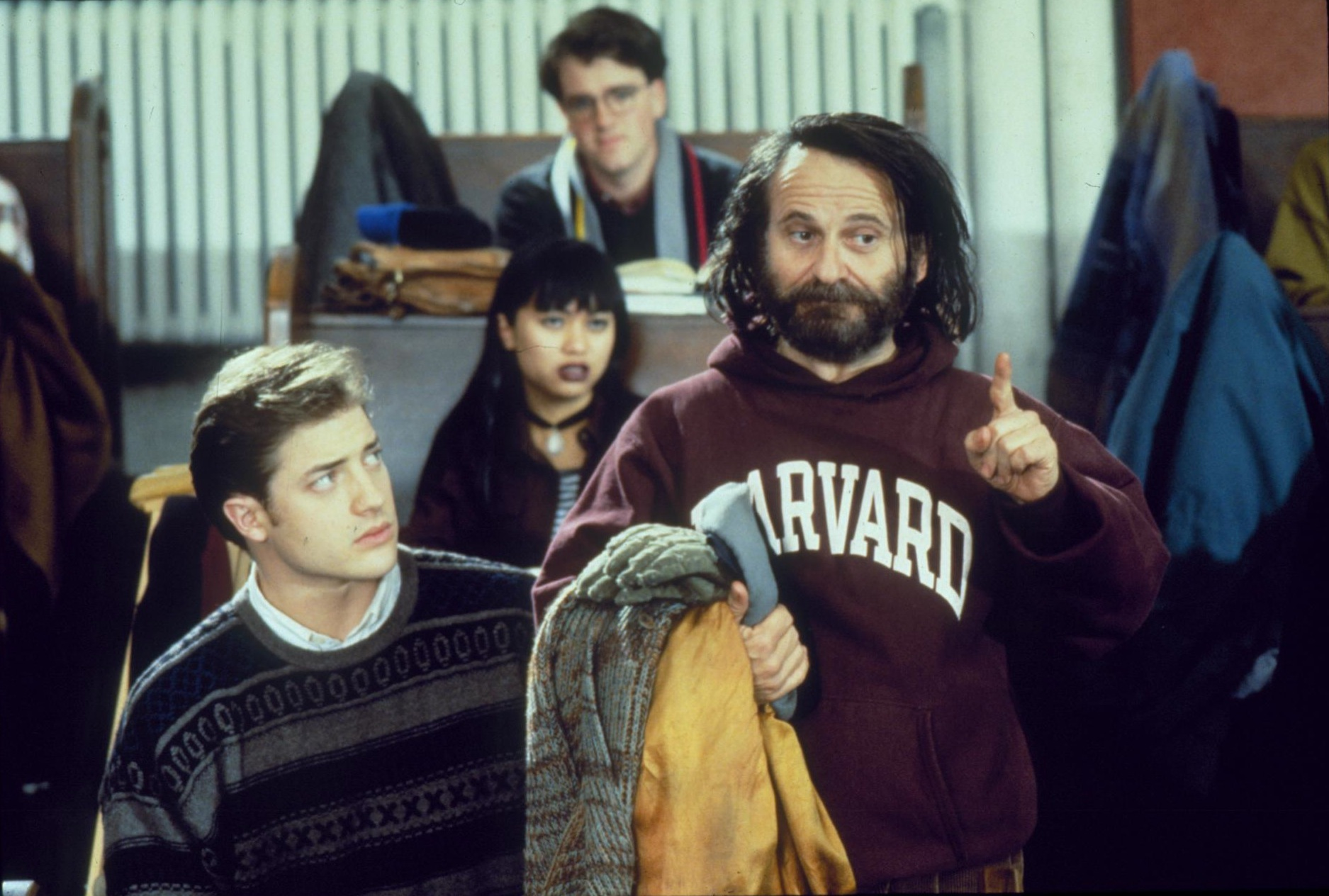
Fed up, Pesci turns to leave and asks, "Which door do I leave from?"
The professor sniffs: "At Harvard, we don't end our sentences with prepositions."
"Okay," says Pesci. "Which door do I leave from, asshole?"
Others (rightly) point out that there is no basis in English grammar for this writing rule.
My advice took a different approach:
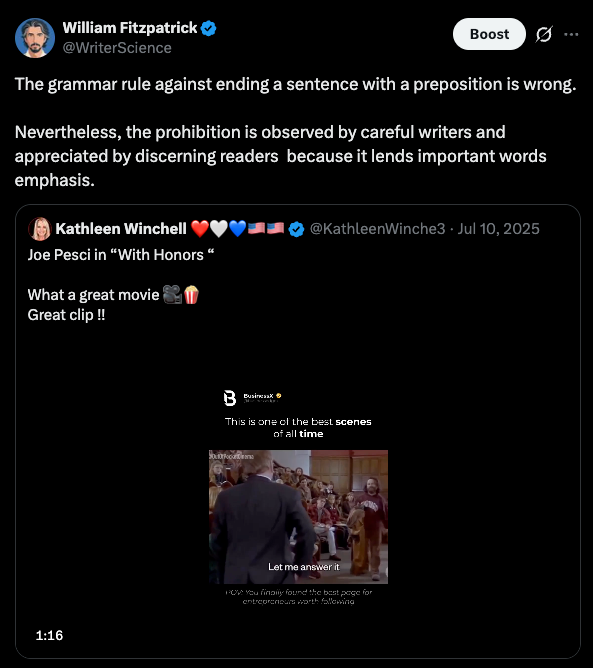
Yes, the old rule against ending sentences with prepositions is grammatically wrong.
But careful writers should observe the rule anyway.
Why?
Because the end of a sentence naturally receives emphasis, so you want important words there. You shouldn't waste that emphasis on throwaway function words like prepositions.
In speaking, it's not like it's a mistake to end your sentence with a preposition.
But writing isn't speaking; it's a craft, which gives us the opportunity to arrange our words in patterns designed to have certain effects on our reader.
For expert writers, decisions like this matter.
Your readers' attention is precious. It shouldn't be wasted. (In that last sentence, I first wrote Don't waste it.)
Every word at the end of your sentences gets extra stress. So you make strategic choices: Do you want to emphasize the preposition, or something more substantive?
Consider the difference between these two sentences:
- He is a person I have great respect for.
- He is a person for whom I have great respect.
Is it 'wrong' to end the sentence with the preposition for? No.
But given the choice, which word would an expert writer want to emphasize: for or respect?
Many would agree that Sentence 2 is the better sentence.
That's my advice. Practical, actionable, reader-focused.
Then Oliver Kamm shows up.
In case you haven't had the pleasure, Oliver is a British neocon who, when his political takes became overshadowed by more charismatic pundits like Douglas Murray, pivoted to grammar pedantry. He wrote a book called Accidence Will Happen: The Non-Pedantic Guide to English. (The irony in that book title will become clear momentarily.)
His first shot across the bow:
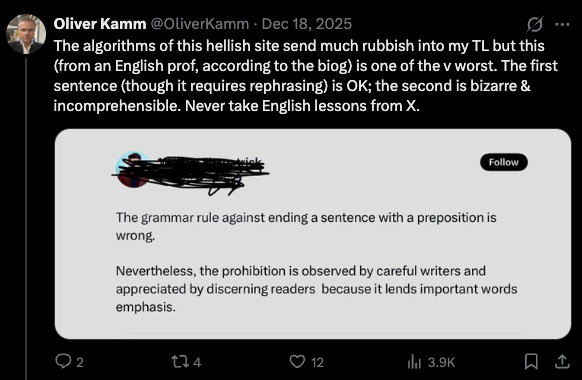
Notice what he's doing here.