
I wanted to prove a point in my critical thinking class:
We think with emotion, not with reason.
But I used an example that definitely raised some eyebrows.
If I explain it clearly, then students get an important insight about how to discover valuable ideas.
But if I screw it up, then I'm in trouble.
At best, students will think I'm weird; at worst, they could report me to the university administration.
Here's hoping I can pull it off.
In this issue...
- A method for finding valuable ideas (so you don't outsource your thinking to AI or groupthink);
- An opportunity to have your writing reviewed by me;
- A simple principle to convert choppy writing into prose that flows.
🔎 The Inquiry Method
Teaching, Taboo, and a Method for Finding the Truth
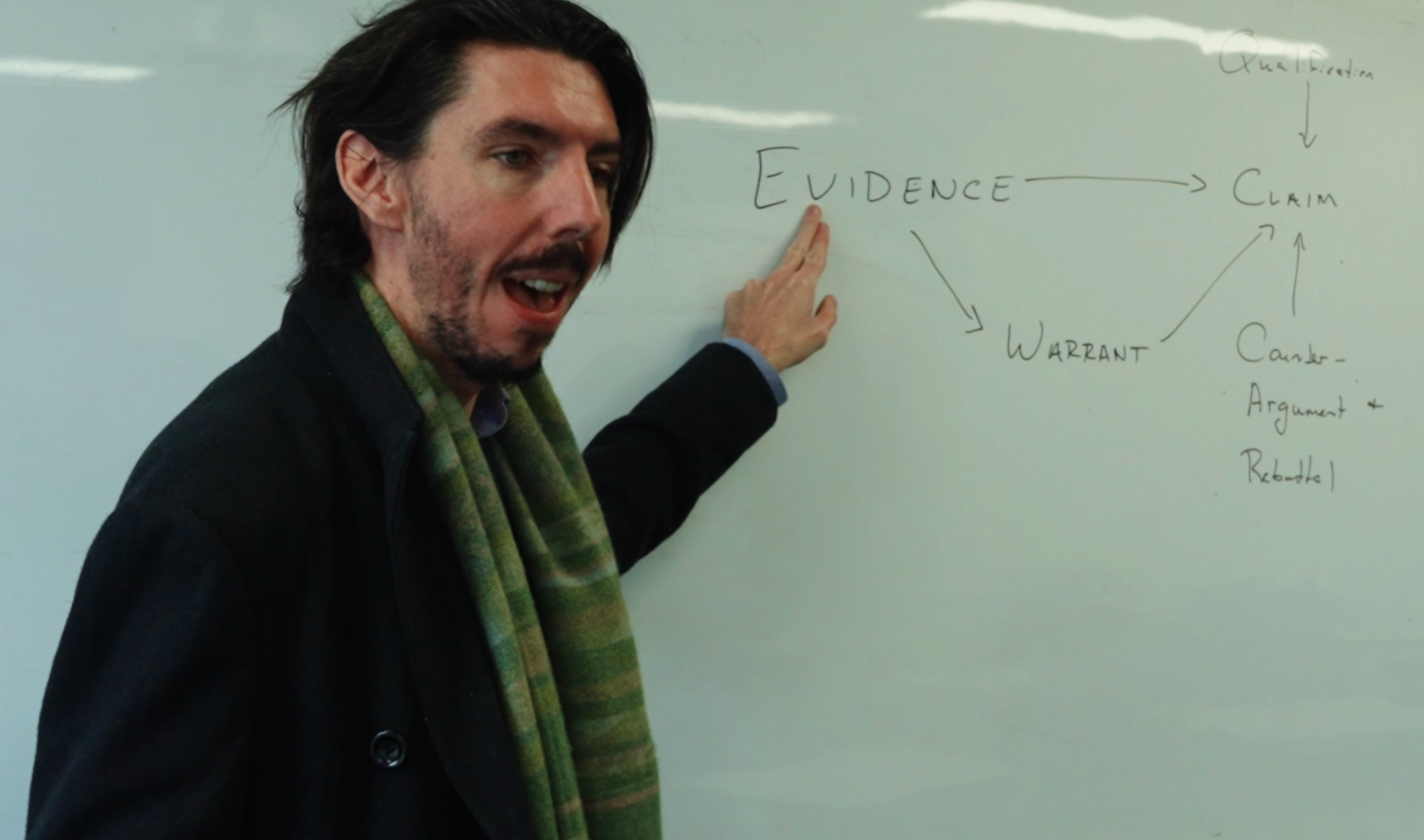
It's the start of the semester and I'm standing at a whiteboard in a university where nobody knows me yet.
I ask my students a pretty risky question:
Is it alright for a brother and sister to make love?
Reader, hear me out.
Yes, this question is a good way to wrench students awake in a 9am class.
It's also a good way to get fired.
But there's a method to my madness.
Over the next few minutes, these students are going to demonstrate what's wrong with the way we normally think—not just the way undergrads think, but all of us.
Then I'm going to give them a 4-step method for coming up with valuable ideas. True ideas. The kind of ideas that help readers make sense of the world.
But before I give them that method, I need to set up a problem.
Because, as I'm always stressing:
So before I give students the method for finding the truth, I need to show them what happens when they don't have one.
So I tell them a little story:
Julie and Mark are a brother and sister on holiday in France, driving between small towns, staying in motels. Near the end of the trip they decide to try something new: they agree to make love. Julie's on the pill, but to be safe Mark uses a condom anyway. It goes fine. They decide not to do it again, and not to tell anyone. The secret brings them closer together.
Is what they did wrong? If you think it's wrong, raise your hand.
Every hand in the room goes straight up.
Ok, ok. And what about the people who think it's fine—raise your hand.
All hands down.
Alright, so tell me what's wrong with it.
The first student says their child would have birth defects, lower IQ, health problems—we know this from science.
True, I say. It would be wrong if they had a child. But since they used two forms of birth control, that seems unlikely. So if there's no child, is it still wrong?
Yes, he says. It's still wrong, even if there's no child.
But he's not sure why.
The second student jumps in—it could create social disharmony, he says. Even if the siblings are okay with it, their family would not approve and they could all become estranged.
Also true, I say. But since nobody found out, is it okay?
No, he says. It's still not okay.
Can anybody give me an argument as to why it's wrong?
The third student thinks for a second and says: it's just wrong. And shrugs.
That shrug is the teachable moment I was looking for.
I walk them back through what they just did:
- Question—I ask a question
- Answer—They give an answer
- Reason—I ask why; they give a reason
- Evidence—I point out the evidence doesn't match the reason. They stick with the answer, and find a different reason.
The answer comes first, reason second.
That's the way we normally think: we make decisions with our hindbrain, the center of emotion and instinct. Then the neocortex comes online and, like a lawyer, argues for why its client was absolutely justified in his decision.
This way of thinking has an evolutionary purpose. It protects us from known danger, like snakes and heights. And it keeps us aligned with the interests of our group. And it's a good way to enforce social taboos, like inbreeding.
But it's a bad way of arriving at the truth.
And if you want your writing to be valuable—if you want to answer questions and solve problems; if you want to use writing as an extension of your thinking—then you need a method for discovering the truth.
Not what your group thinks. Not what your hindbrain thinks. Not what AI says.
What do you think?
If you want to find out what's true, follow this method: