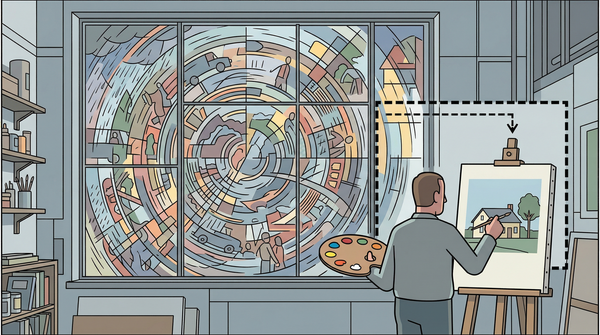
Most advice on clear writing is about cutting: shorter sentences, simpler words, fewer adverbs. Some of that helps. But clarity isn't a property of short sentences. Readers look for the characters in the subjects, the actions in the verbs and the news at the end, and when actions hide in nouns and the news sits in the middle, even a short sentence of plain words reads as fog. So writers cut and cut, and the draft gets shorter without getting clearer.
These posts give you the principles behind clear sentences, drawn from Joseph M. Williams and George Gopen: put characters in subjects and actions in verbs, connect sentences old-before-new, and save the most important information for last.